
Pre-implantation Genetic Diagnosis
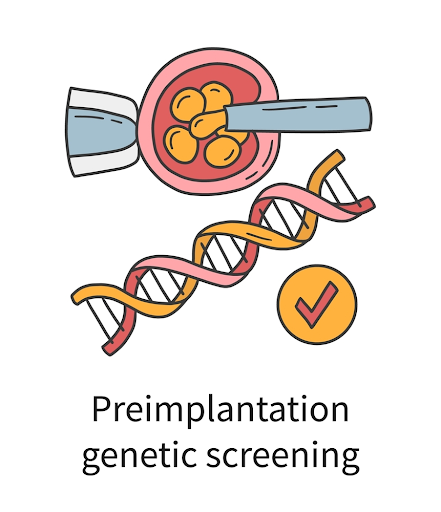
This is a genetic diagnostic test that is employed in order to examine the genetic information contained in the cells of an embryo. It is a screening test that is performed on an embryo that was gotten through in vitro fertilization. The procedure is done to determine if there is any problem with the embryo before being transferred into the uterus.

Why is pre-implantation genetic diagnosis requested by couples?
Pre-implantation genetic diagnosis is employed by couples who have a serious heritable disease and are wary of passing the condition to their children. The procedure searches for the markers of the particular disease that is being diagnosed, like looking for the single gene disorder which indicates the presence of sickle cell anemia and cystic fibrosis.
Typically, the couples that request this service are not necessarily infertile but want to reduce the risk of passing down a genetic disease to their offspring, thereby preventing a life of disease or even early death of the baby. All couples generally have a risk of having an abnormal embryo; however, the risk increases significantly with the couple’s age. An abnormal embryo, when transferred, either fails to implant or even when it does implant, can cause a miscarriage, fetal death, a stillbirth, or a baby with abnormalities.
Couples may also request the diagnosis when there is severe male factor infertility, a very large number of embryos, older age, or recurrent failures of IVF cycles. In some other cases, couples may also use genetic diagnosis to find matching stem cells for other children that may need stem cell transplants. Pre-implantation genetic testing is available for almost all heritable diseases that their exact mutation is known. An exact test is crafted for the couple, and this may take months to complete before commencing the IVF cycle.
What are some of the diseases that can be diagnosed?
Couples that are carriers of genetic diseases have the opportunity of employing a genetic diagnosis of their embryos to make sure that they do not have the condition before transferring the embryo into the uterus. One of the most widely tested conditions during genetic diagnosis is a single-gene disorder. They are caused by the inheritance of a defective gene. These disorders are classified as either recessive or dominant. While a recessive disorder requires two bad copies of the gene in order to be passed on to the baby, a dominant single-gene disorder needs only one copy of the defective gene to cause the disease.
Currently, there have been over one thousand single gene disorders that have been identified. Many of them are quite rare, while some are quite common in certain ethnic groups. With these common disorders, routine checks for them are usually advised before getting pregnant. There are hundreds more genetic diseases that can have single gene testing done using IVF and pre-implantation genetic diagnosis. Some of the relatively common single-gene diseases are:
- Autosomal recessive disorders – Sanhoff disease, Gaucher disease, adrenal hyperplasia, Fanconi anemia, phenylketonuria, glycogen storage disease, adenosine deaminase deficiency,
- Autosomal dominant diseases – neurofibromatosis, polycystic kidney disease, achondroplasia, retinitis pigmentosa, osteogenesis imperfect, myotonic dystrophy, familial adenomatous polyposis, Marfan syndrome
- X-linked disorders – X-linked hydrocephalus, Ornithine carbamyl transferase deficiency
How is pre-implantation genetic testing done?

The pre-implantation genetic diagnosis uses IVF where multiple eggs are matured and harvested. After the harvesting, the eggs are then fertilized either by mixing them with sperm or through intracytoplasmic sperm injection. After the embryos form, they are grown in a culture medium until they are at the 6-8 cell stage, which is about 3-5 days of embryo development. At which point the embryo is biopsied, that is the removal of one or two cells. This is done in such a way as to avoid any damage to the embryo. The isolated cells are then tested for the outlined specific genetic condition. The embryos that are found to be unaffected are kept for the transfer to the uterus of the woman. The excess embryos are usually stored and frozen for other subsequent transfers or surrogacy purposes. Two main techniques are used for genetic diagnosis, they include:
- Polymerase chain reaction (PCR) – In PCR, there is an amplification of the gene of interest, that is multiple copies of it are created. This amplification allows for the identification of very small amounts of the DNA needed for the diagnosis.
- Fluorescent in situ hybridization (FISH) – It allows the laboratory to number the chromosomes in an isolated cell. The technique is employed primarily for expected abnormalities in the number of chromosomes. This is used to diagnose conditions such as Down syndrome or translocations (defects in the structure of the chromosome).
What are the risks associated with a pre-implantation genetic diagnosis?
There are no extra documented risks that are associated with pre-implantation genetic diagnosis apart from the already recorded risks of IVF to the mother and the baby. The process involved in genetic diagnosis however poses a small risk of damage to the embryo, which may cause a failure of implantation of the said embryo. A small portion of the embryos that go through the process of pre-implantation genetic diagnosis around 5% is lost through the damage. Another issue with the test is the inaccuracies that may be encountered in some of the test results as the diagnosis is not 100% accurate. This is why it is recommended for the woman to also undergo typical prenatal testing when the woman is pregnant.
Are there any ethical issues associated with a pre-implantation genetic diagnosis?
As technology continuously evolves, the practice of selecting particular genetic traits to pass to a child will become a common practice. This will become a problem as it significantly moves away from the original intention of the technology; which is reducing the number of unsuccessful embryos and embryos with heritable genetic defects. The fear is that as technology advances, couples may start to look for particular traits they want to pass to their offspring, while also selecting the particular traits to drop.
The information provided in this blog is for educational purposes only and should not be considered medical advice or legal advice. It is not intended to replace professional medical consultation, diagnosis, or treatment. Always consult with a qualified healthcare provider before making any decisions regarding your health. Read more